CJR — how a decision is deconstructed
A decision is not one blob of text. Akashic Record breaks it into Condition, Judgment, and Reasoning — so the structure can be stored, compared, and reused when a similar situation returns.
The situation you observed — constraints, signals, and assumptions at the time.
The call you made under those conditions — what to do, defer, or refuse.
Why that judgment followed — the logic you would reuse or revise later.
Structure the decision before the debate
Decision context, conditions, evidence, and initial reasoning become a CJR candidate — Condition, Judgment, Reasoning.
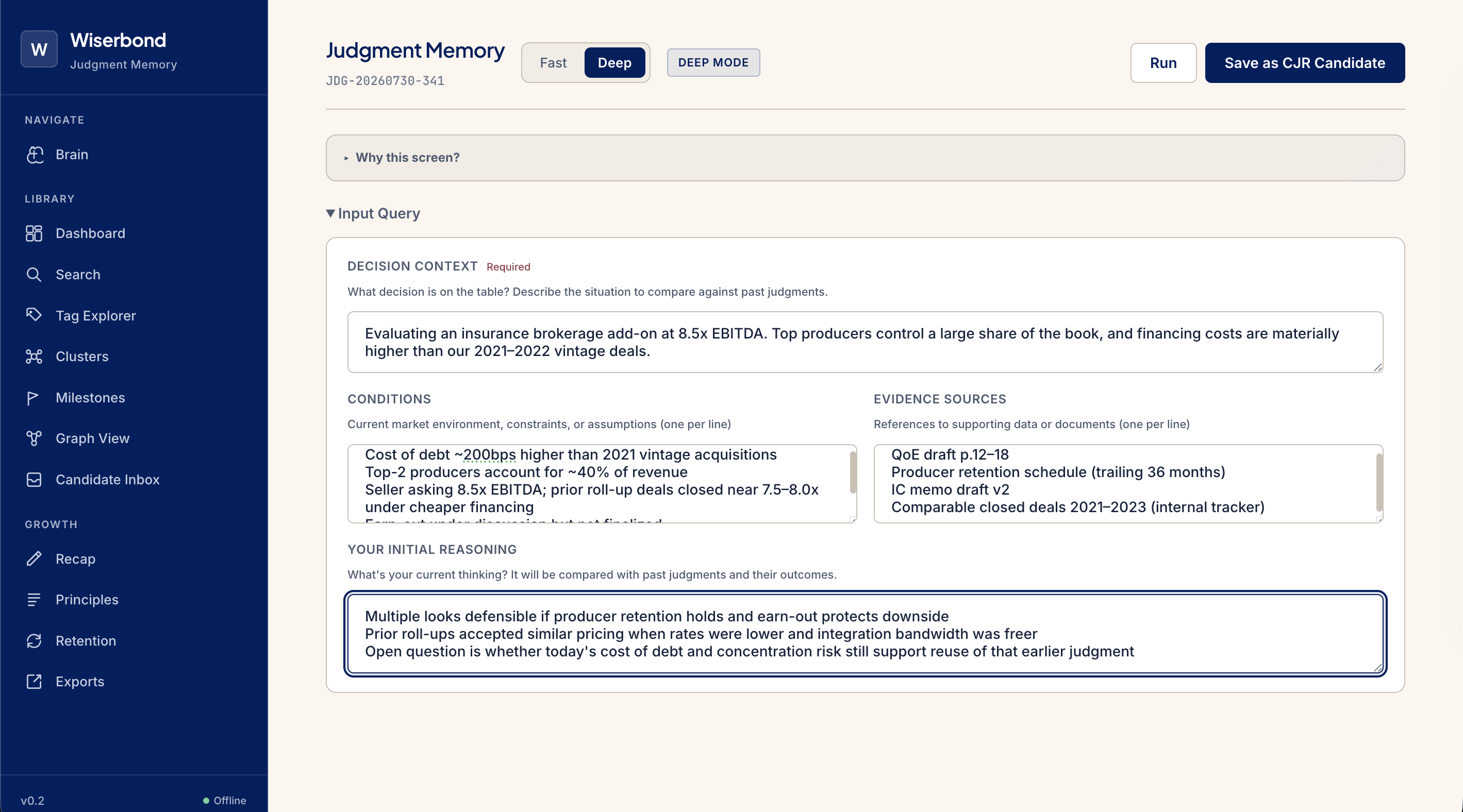
Past judgment is a starting point
Material differences, conflicting evidence, and a draft for humans to confirm. AI proposes; people decide what becomes memory.
How the precedent becomes a controlled update
Reuse with modification, the conditions that would reopen review, and the lineage tying the new memory to prior CJRs.
Why this precedent — and why not the others
The Evidence Room keeps the selected judgment, its conditions, and the classified alternatives in one reviewable trail.
This is our architecture
Documents enter as candidates. Humans confirm. CJR is the reusable unit — searched, compared, and improved over time.
Pilot with your team
Fifteen minutes. No pitch deck — questions about how you preserve decisions.
Request a 15-min Interview